Mrs. Brabbs Reading Class 2020-21

Posts

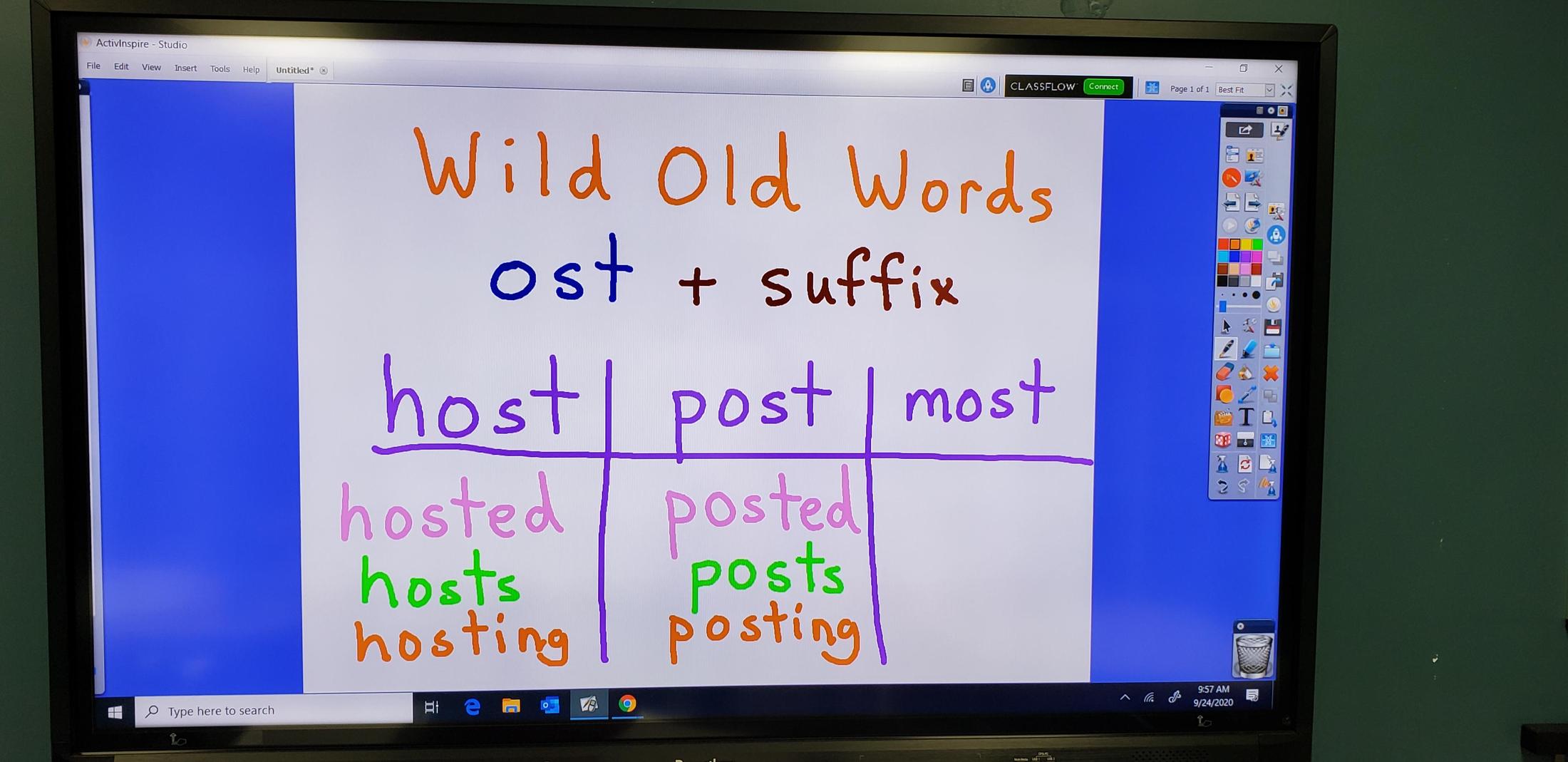
We started learning about Wild Old Words in Reading this week.  The Wild Old Words do not follow the short vowel in a single closed syllable rule, but instead have a long vowel.  They include ostind, old, ild, and olt words.  So far, we have learned the ost and ind pattern.     


There are only three words that follow the ost pattern: host, post, and most.  We were able to add suffixes to these words and made hosts, hosted, hosting, posts, posted, and posting.  We practiced making word sums and added these words to our suffix notebook. 


We also started learning the Wild Old Word pattern of  ind.  The ind words include kind, find, mind, bind, blind, grind, hind, wind, and rind.  We started to add prefixes and/or suffixes to the ind pattern, as well.  Examples include kinder, finding, grinds, unkindest, and blinded.  


Have a safe and fun Fall Break!  
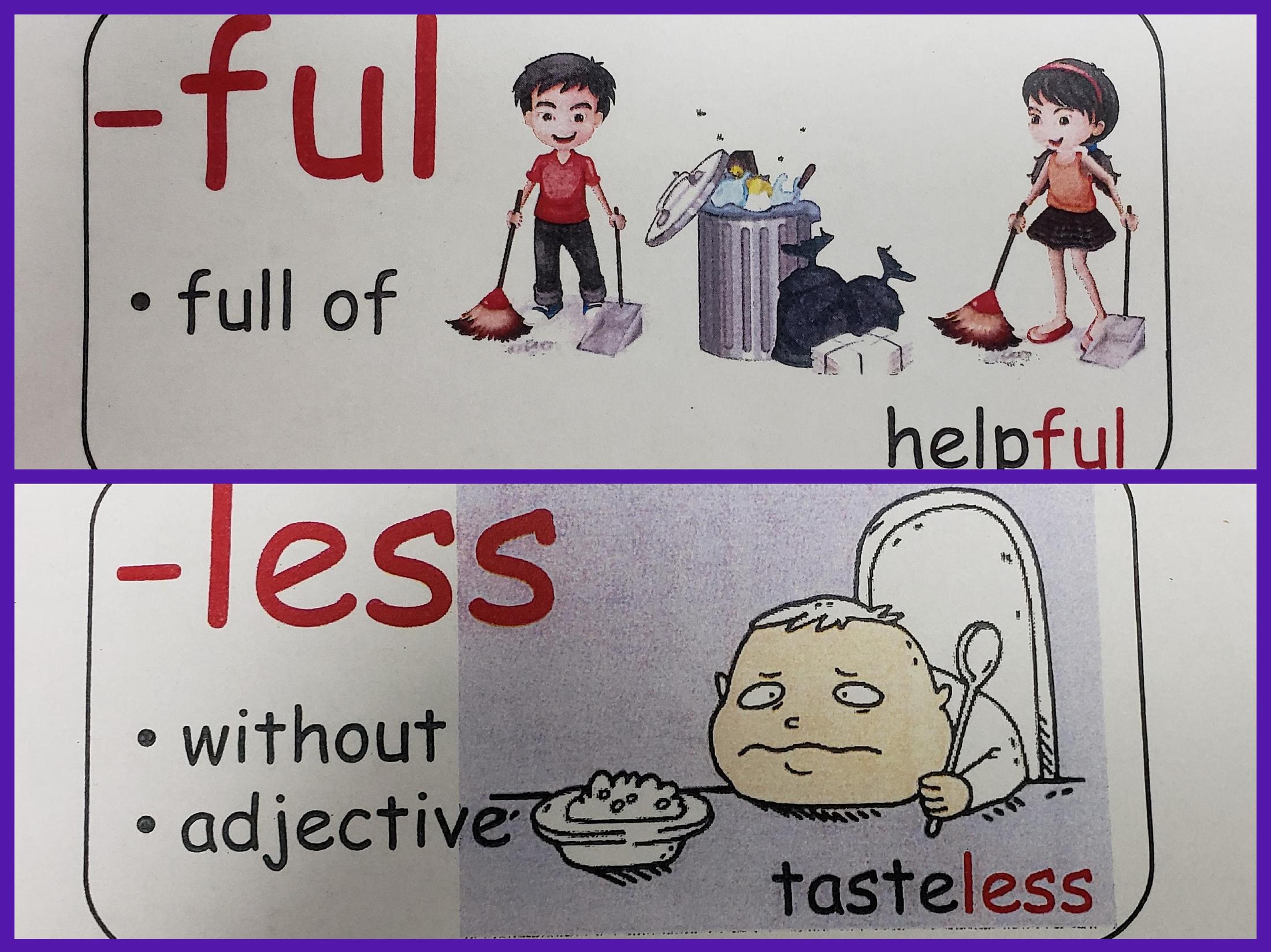
 

We have learned two new suffixes to add to our toolbelt!  The suffix -ful and the suffix -less.  We have been really working on learning the meanings of these two suffixes.  Suffix -ful means "full of," while suffix -less means "without."   


There is an enormous difference between the antonyms hopeful and hopeless: full of hope or without hope.  Helpless and helpful have completely different meanings, as well.    


When reading with your child, please make sure to have them tell you the meanings, using "full of" or "without." Understanding the meanings of these suffixes is critical to their comprehension of a reading passage.  

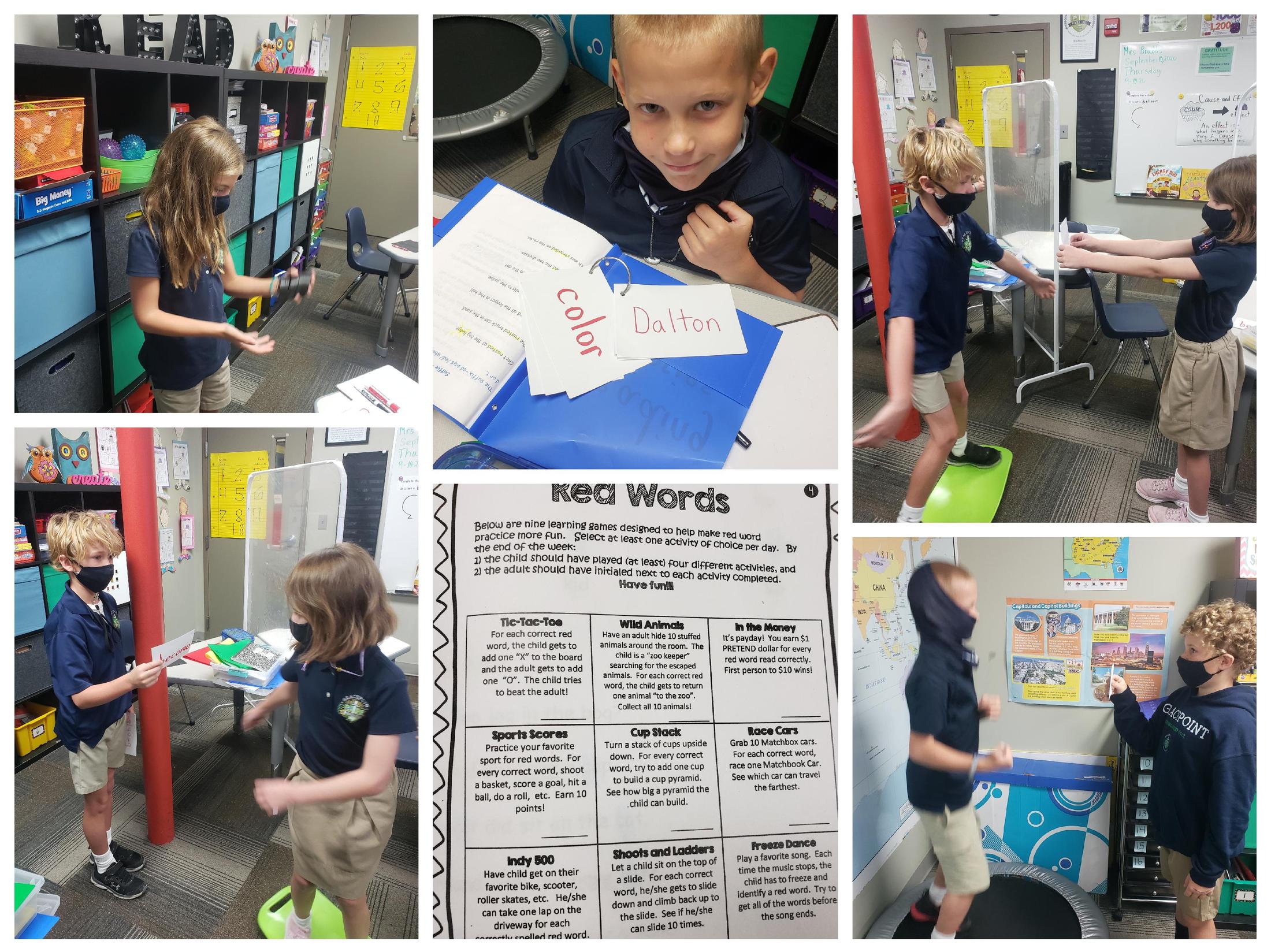
Red Words!  Red words are words that do not follow phonetic rules.  They are different from sight words in that these words cannot be tapped out and the students need to use their orthographic memory to correctly read and spell these difficult words. Since these words are hard, we know our students need many exposures to them and it is why practicing the red words is a daily part of their Reading homework, as well as reading from their blue folder.     

When given a red word in class, the student traces the letters of the word in red crayon.  They do this on top of a bumpy pad, while saying each of the letters out loud.  Then, they draw a line underneath the word and say the whole word.  This procedure is practiced three times.  Next, they will orally spell the word three times again while moving their body and making sure to cross their midline. The midline is an imaginary line through the center of the body.  Crossing the midline is important because it helps to connect both hemispheres of the brain and enhances learning.     

When they have completed moving their bodies and crossing the midline, the student writes the red word.  If they miss the word, they cross it out and write it again three times and complete the procedure again.  The student will also practice writing the red word in a phrase during dictation.  If they misspell the word during this process, they will repeat the word next class.  The students are responsible for correctly spelling red words they have had in other classes, as well.    

In the classroom, the students use the trampoline, fit board, slinky, ball, or wall to practice the red words.  Ideas for practicing red words at home can include writing the words using chalk, sand, sugar, paint, butcher paper, or shaving cream in the bathtub or shower.  Your child can even build the word with Legos or Play Doh.  It can also be fun to turn red word practice into a game (see the picture for ideas).  Please let me know if you have any other great ideas!      


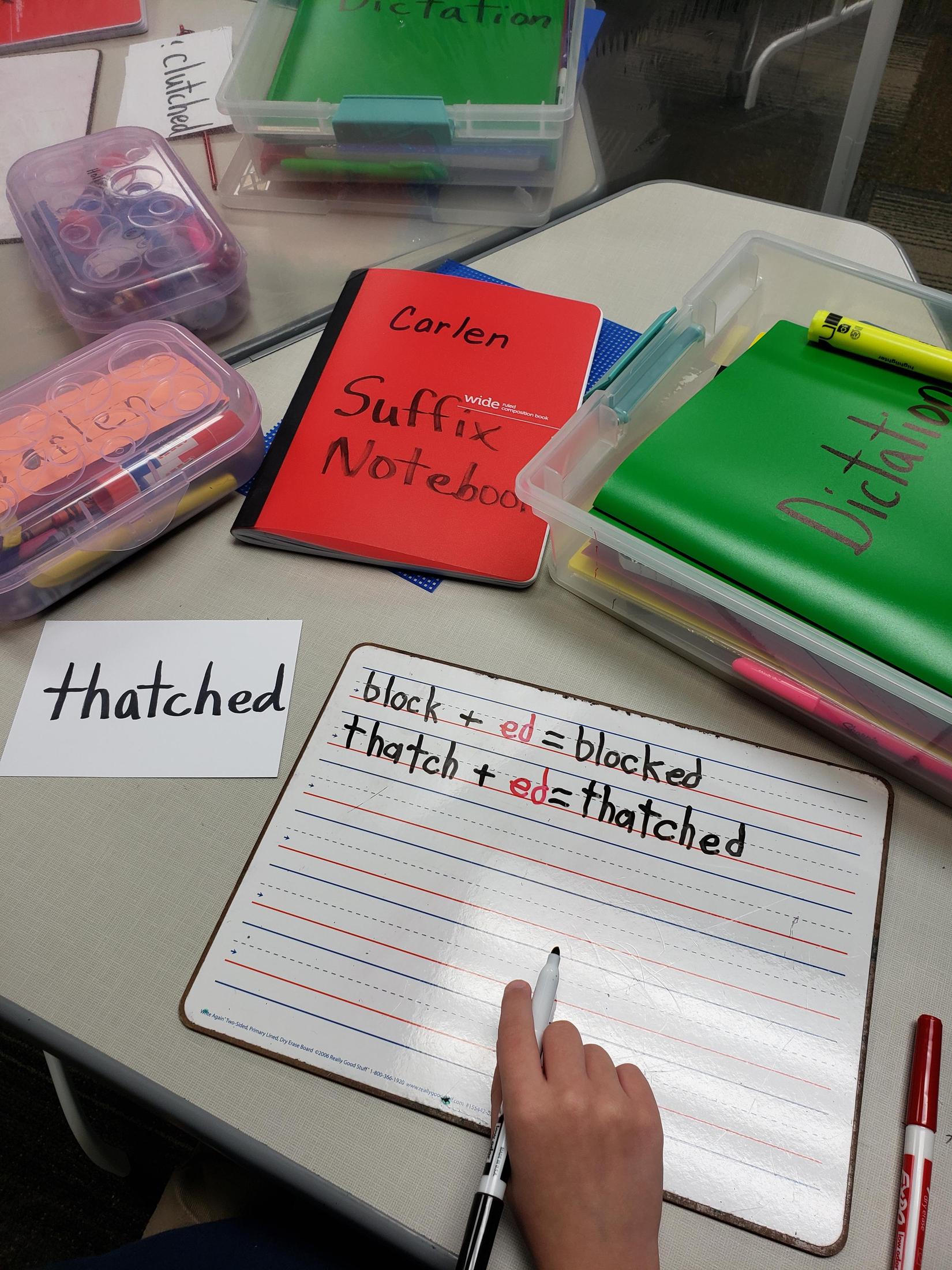
Word Sums Part Two!  In the last blog, I showed a picture of the students showing off their completed word sums.  Here is an up-close picture of a student completing word sums for the suffix -ed.  We know our dyslexic students have difficulty with spelling words and word sums are a fantastic way to help them to successfully spell a word!   


The word "thatched" is a hard word to spell, but doing a word sum helps the student to spell the word because it requires breaking it down into the base word, "thatch" and then adding the suffix -ed.  She knows the word thatch is a closed syllable word (one syllable, one short vowel immediately followed by the /ch/ sound ends in a <tch.>  She can then add the suffix -ed and even though it sounds like a /t/ when spoken, she knows it is really the suffix -ed at the end.   


After reading stories or sentences from the blue folder, you could pick out a few of the highlighted suffix -ed words and have your student practice spelling the word by using word sums.  I'm sure they'd love to show you how to complete a word sum!       


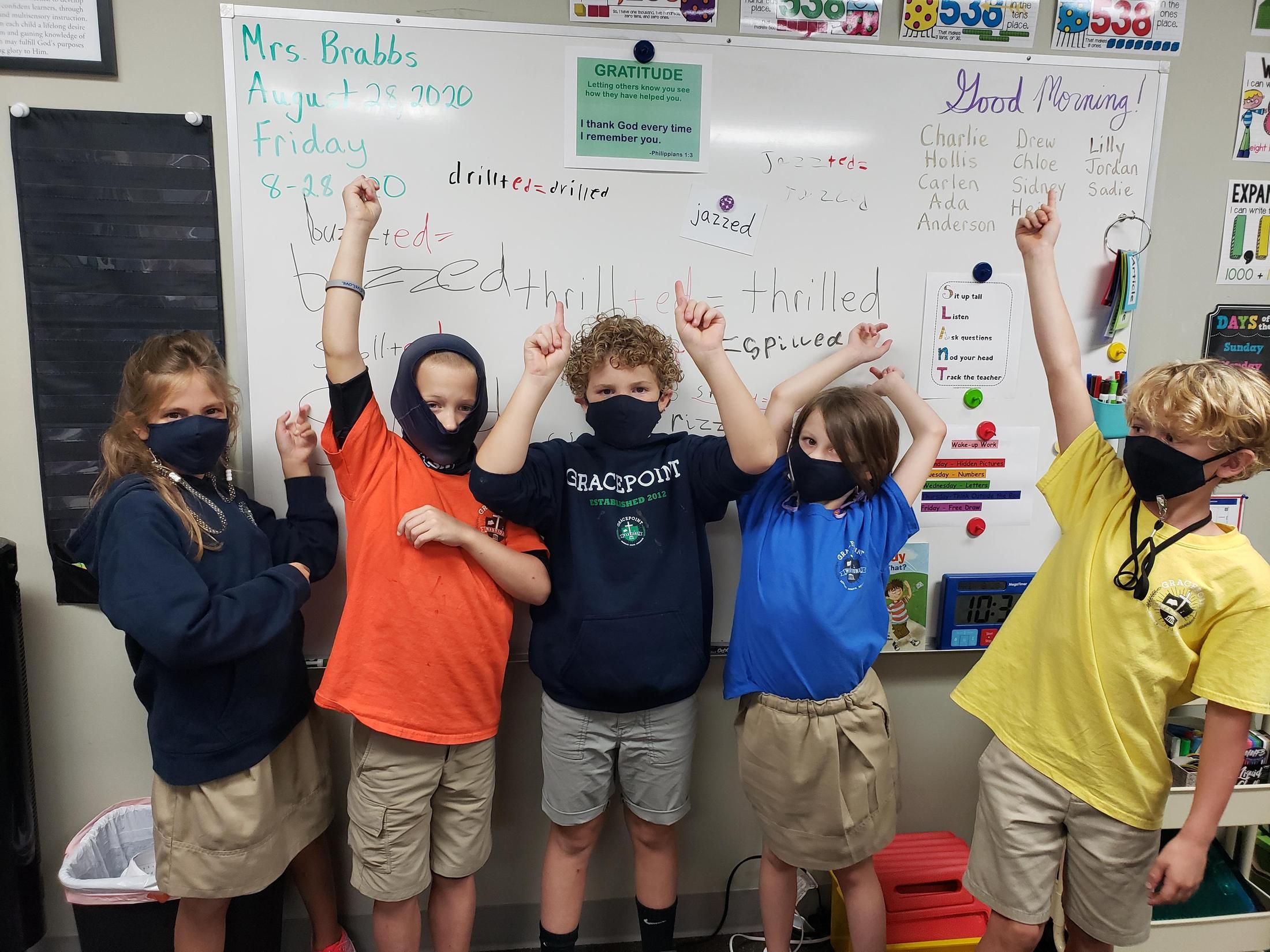
Word Sums!  In the picture, the class is proudly showing off the word sums they made and then added to their suffix notebook.  What is a word sum you ask?  With word sums you add the morphemes (the smallest units of meaning) to make a new word.  The base word is written in black, prefixes in green, and suffixes in red.  Word sums allow the students to use their morphology skills to understand the meaning of words and how to correctly spell the words.    

Here are some examples of word sums we have been making while studying the three sounds of the suffix -ed:   

jazz + ed= jazzed 

drill + ed= drilled 

un +brand + ed= unbranded (not branded) 

test +ed=tested 

jump + ed= jumped 

mis +box +ed=misboxed (put in the wrong box) 

The suffix -ed is complicated in that it has three sounds when pronouncing a word. It can make the /ed/ sound in unbranded and tested.  However, when you pronounce jazzed and drilled, it makes a /d/ sound.  To complicate it even more, the suffix -ed makes a /t/ sound in jumped and misboxed.     

Word sums help alleviate this confusion because no matter the sound suffix -ed makes when pronouncing the word, the students can see that it makes a word past tense and is always spelled "ed."   

Please reach out with any questions you may have about word sums or Reading Class.  Please try to be reading from the blue folder 20 minutes a day.  Read the current story/sentences and reread from the folder for fluency practice.  Please also read for pleasure to your child.  You will be amazed that they will start to be able to read more words, sentences, paragraphs, pages, before independently reading chapter books!     

Finally, please note that the students individually came up to the board using their own markers and only posed momentarily for the picture.  


Welcome to Reading!
 
We have had a wonderful first week in Reading! It certainly has been great to be back in person and the students have been impressing me with how quickly they have gotten back into the routine of class.
 
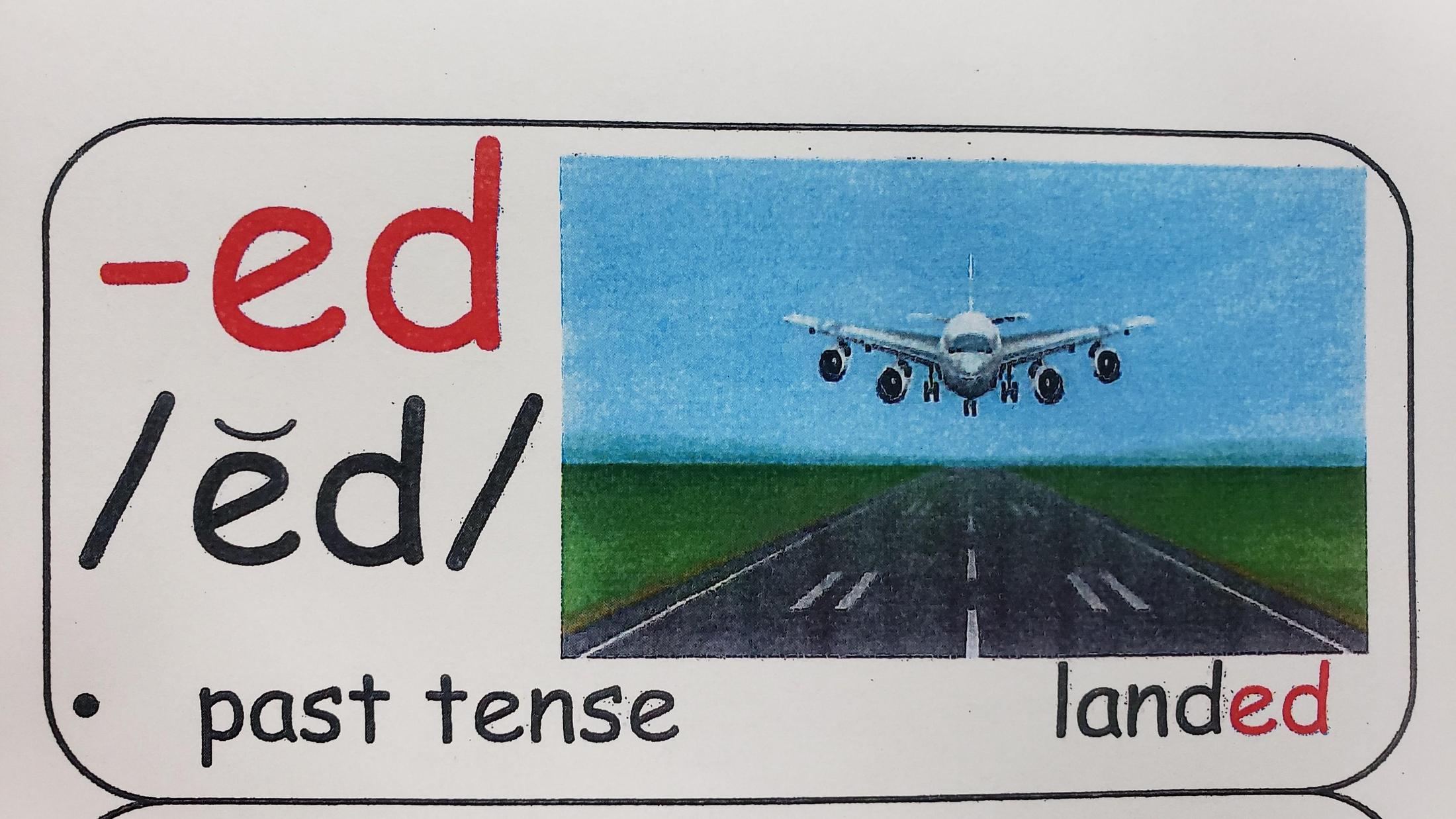
We have started off by reviewing some of the closed syllable rules and have been introduced to the suffix -ed.  Suffix -ed has three sounds when spoken: /ed/ as in landed, /d/ as in thrilled, and /t/ as in jumped.  We have been concentrating on the /ed/ sound of suffix -ed.  The /ed/ sound is spoken when the base word ends in a d or t.  Examples include rested, branded, and funded.
 
Your child will read from the blue folder every day, as a part of their homework.  We will be finishing a red word assessment soon and they will also have a red word ring coming home daily.  Look for more information on expectations and ideas for both of those in an upcoming blog.  In the meantime, please practice reading from the blue folder daily.
 
Finally, please feel free to contact me anytime with any questions, concerns, or even happy moments.  I look forward to working together and watching your child grow and blossom in their Reading skills and abilities!